
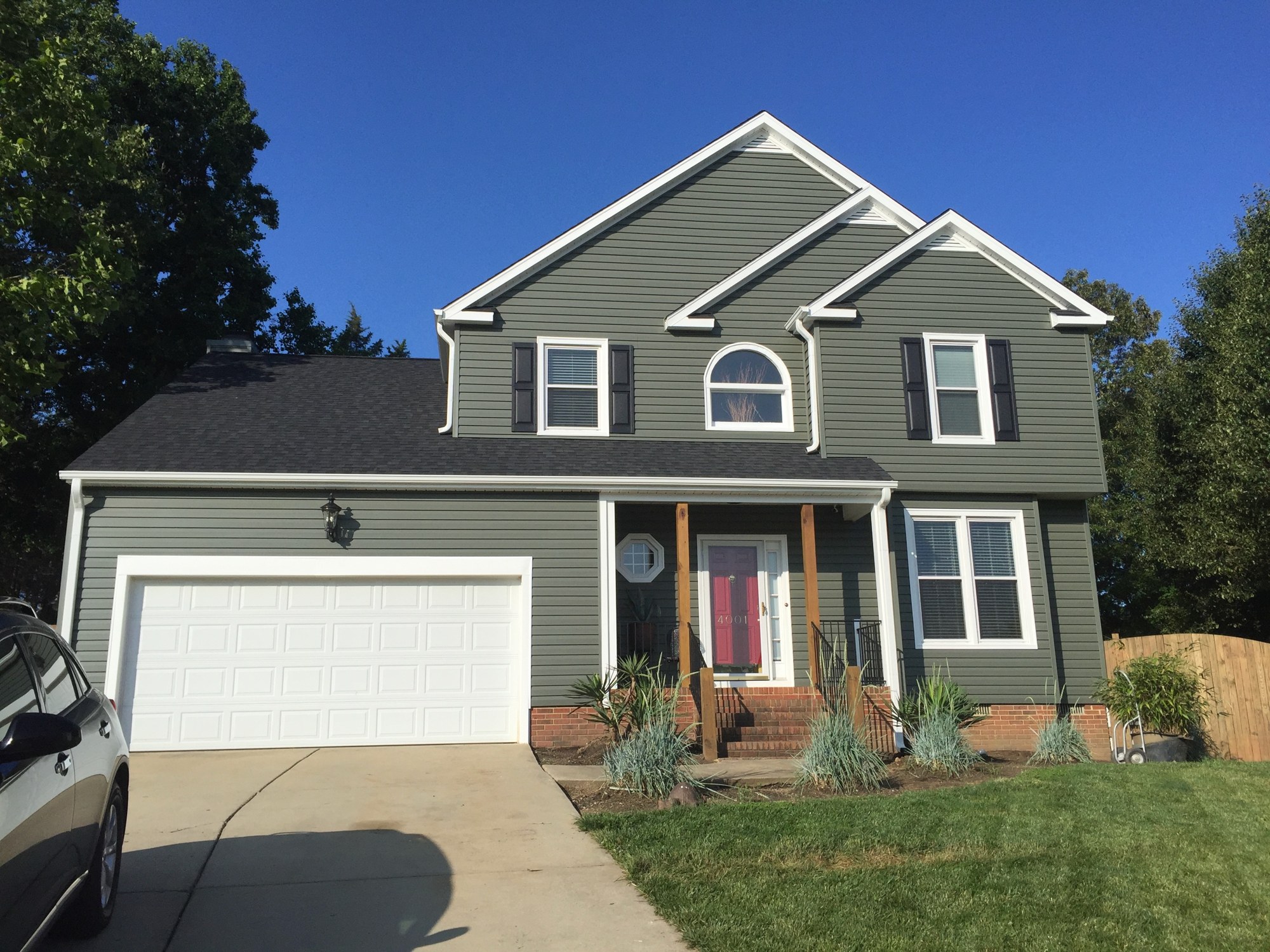
Siding does a lot of quiet work. It keeps rain out of your walls, helps hold your heating and cooling in, and it is most of what people see when they pull up to your home.
Because it wears down slowly, it is easy to miss the point where a repair stops making sense and a replacement starts to. These are the five things we look for when a homeowner in Greensboro, High Point or Durham asks us whether their siding has more years left in it.
Boards that are warped, cracked or loose
Walk around the house and look down each wall from the corner. Siding should sit flat. Panels that bulge, buckle or have pulled away from the wall let water get behind them, and one loose panel usually means there are more nearby.
A few damaged boards can be repaired. Damage on every side of the house is a different conversation.
Soft spots or rot underneath
Press gently on any area that looks off, especially near the bottom of the wall, around windows and under gutters. If it feels soft or spongy, moisture has been getting in for a while.
At that point the problem is no longer just the siding. Have someone look at the wood behind it before it spreads.
Fading that no longer washes off
All siding fades in the Carolina sun, and a good wash brings most of it back. When the color stays chalky and uneven after cleaning, the material is near the end of its life.
Faded siding on its own is not an emergency, but it usually shows up alongside the other signs on this list.
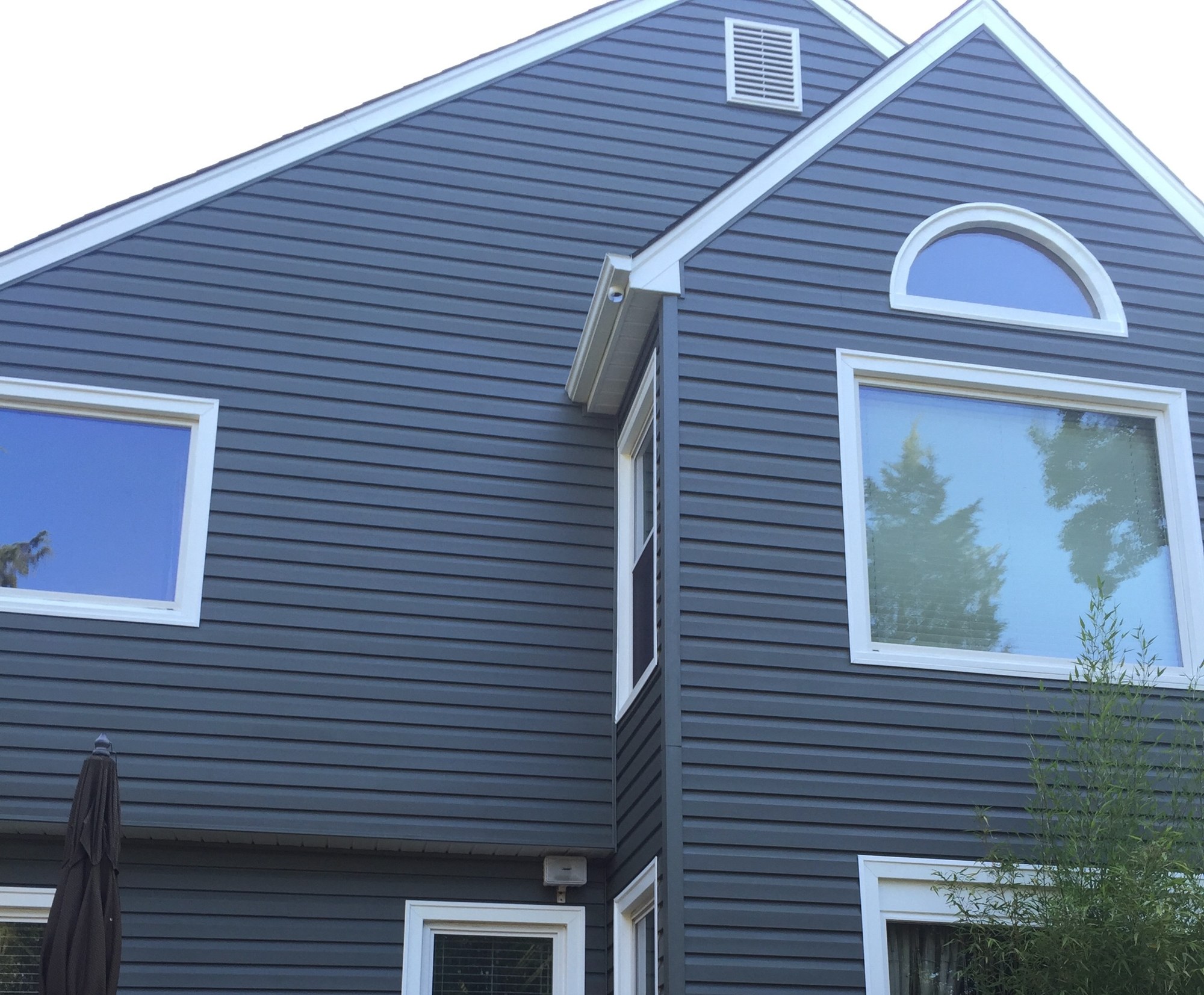
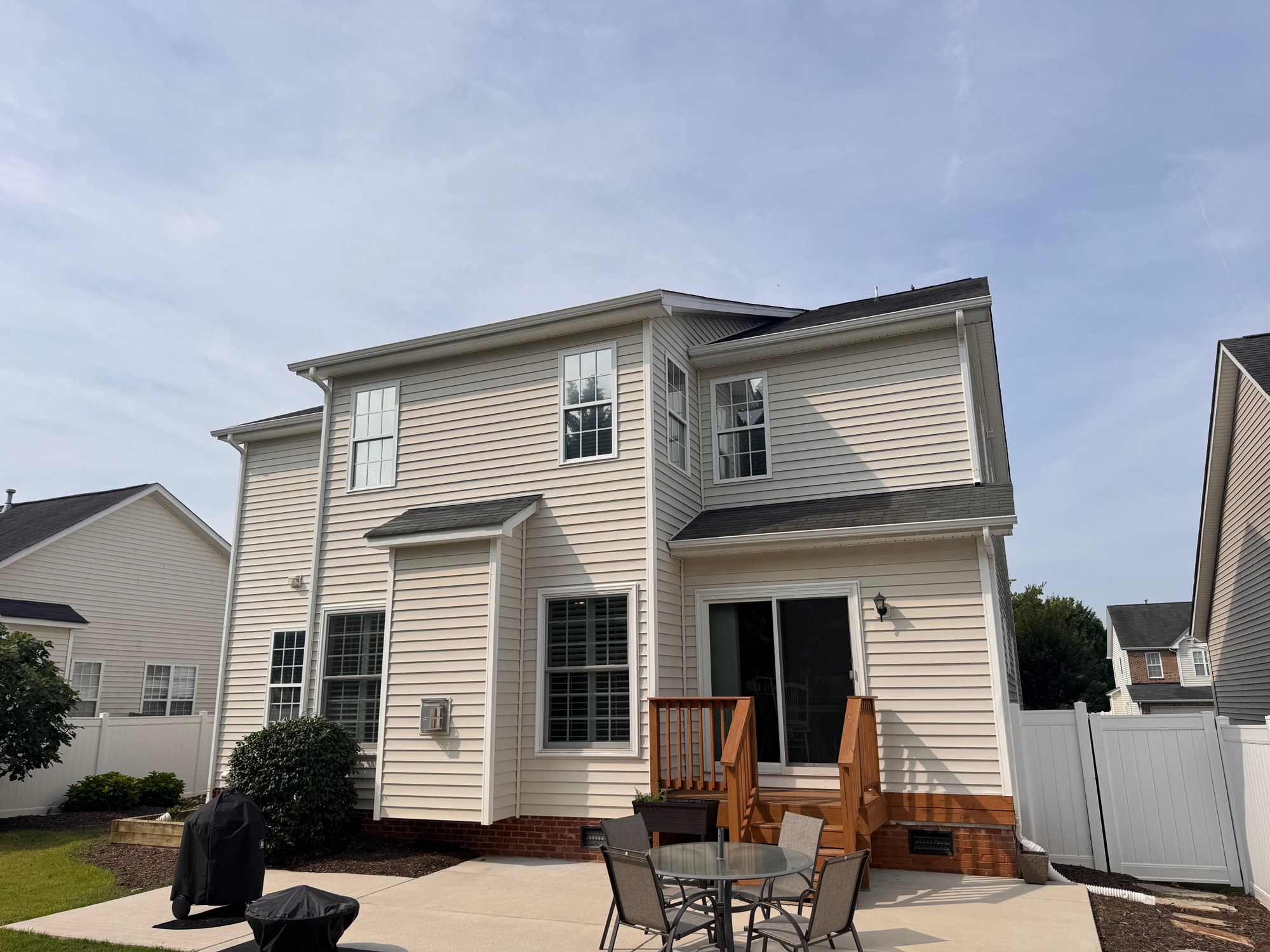
Peeling paint or loose wallpaper inside
This one surprises people. Paint that bubbles or peels on an inside wall, or wallpaper that keeps lifting, can mean moisture is coming through from the outside.
If you see it on an exterior wall and there is no plumbing nearby, check the siding on the other side.
Energy bills that keep creeping up
If your bills are rising and your heating and cooling system checks out, your walls may be part of the reason. Old siding with gaps, and worn out wrap underneath, lets conditioned air leak.
New siding installed over a proper moisture barrier closes those gaps.
Repair or replace?
Not every problem means new siding, and we will tell you when a repair is the right call.
A repair usually makes sense when
- The damage is limited to one area
- The wall behind it is dry and solid
- The rest of the house still looks and feels sound
Replacement usually makes sense when
- You see two or three of these signs
- They show up on more than one side of the house
- You have already repaired the same spots before
Not sure which side of the line your home is on?
We will walk the house with you and tell you what we see. The consultation is free.